Fujifilm Dynamic Range vs Nikon Active D-Lighting: Operational Differences
Disclosure: This post may contain affiliate links. I earn a small commission of product sales to keep this website going.
Fujifilm's Dynamic Range setting and Nikon's Active D-Lighting (ADL) both solve the same problem: protecting highlight detail in high-contrast scenes within a single exposure. They arrive at essentially the same result, but through very different mechanisms. Here's what's happening behind each one, explained conceptually rather than at the sensor-hardware level.

The Shared Core Principle
In a high-contrast scene exposed for the midtones, bright areas often get "blown out," losing all detail and color. Both Dynamic Range and Active D-Lighting solve this the same fundamental way: they underexpose the initial capture to protect highlight detail, then recover the shadows and midtones afterward using a tone curve. This next sequence shows what a high-contrast photo would look like without these settings, then the initial underexposure and subsequent processing.
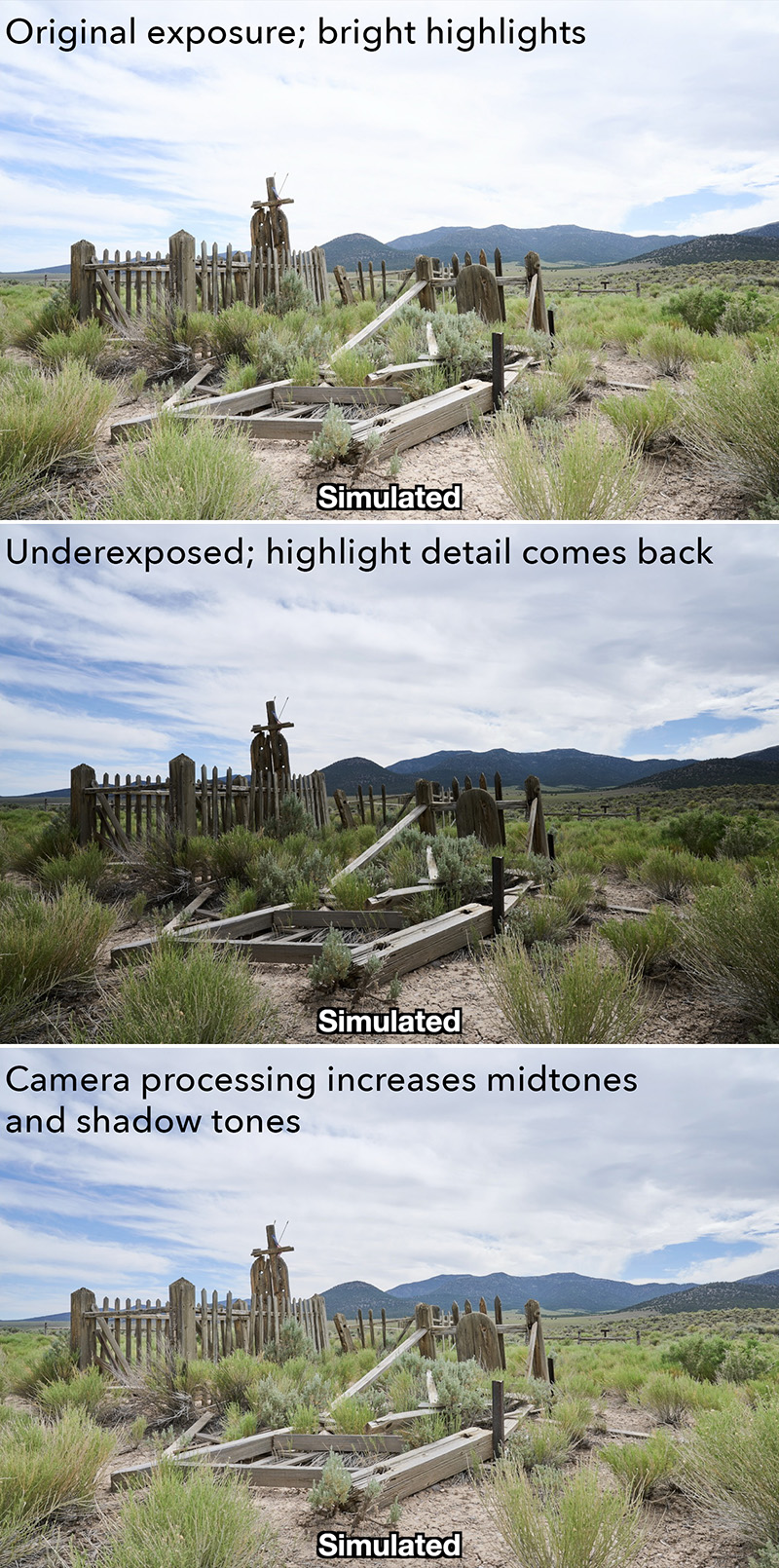
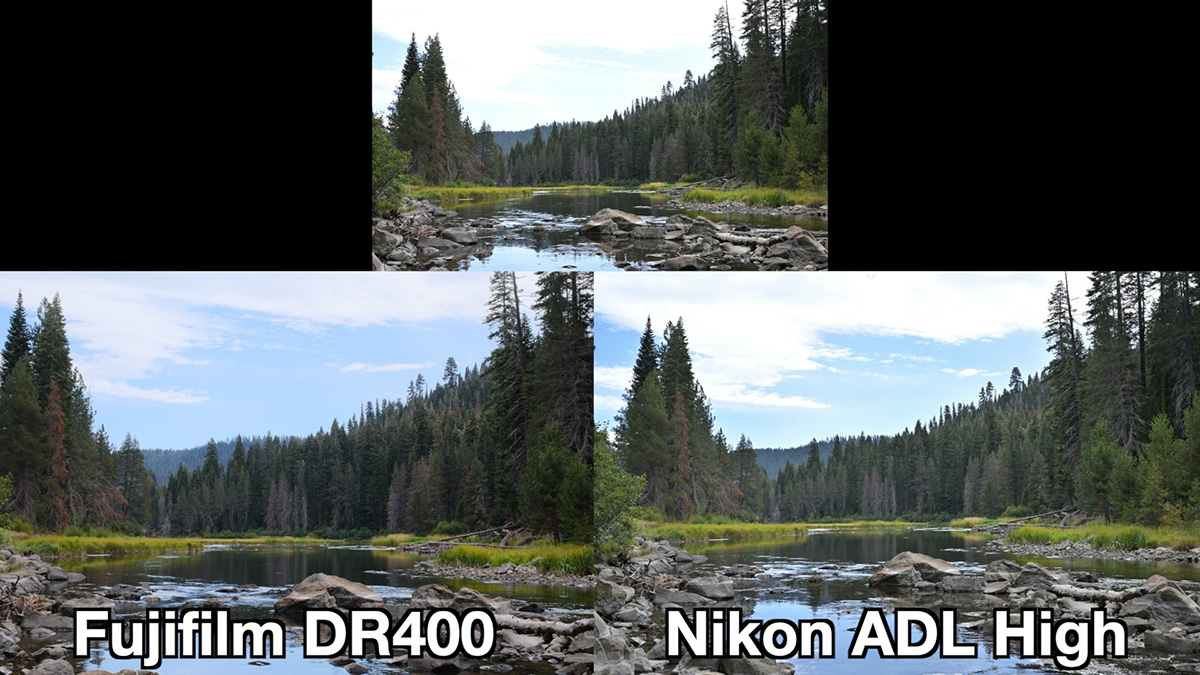
The difference between the two systems lies in what triggers the initial underexposure.
Fujifilm: ISO Is the Trigger
Fujifilm's Dynamic Range settings require a minimum ISO to use. Different generations of cameras have different minimum ISO thresholds for each DR setting, based on that camera's native sensor ISO. You can read more about that in this article.
It's important to understand why that ISO requirement exists. It's not because the sensor needs more sensitivity to record shadow detail. Fujifilm sensors are ISO invariant, meaning that every photo is captured at the same base ISO. Instead, the ISO requirement is simply the mechanism used to force the underexposure.
Here's how it works in Aperture Priority mode, where the camera calculates shutter speed automatically: raising the ISO to meet the requirement for a given DR setting triggers a corresponding increase in shutter speed. That faster shutter speed physically restricts how much light reaches the sensor during the initial exposure, which helps protect the highlights. The camera then lifts the shadows and midtones back up afterward with a tone curve.
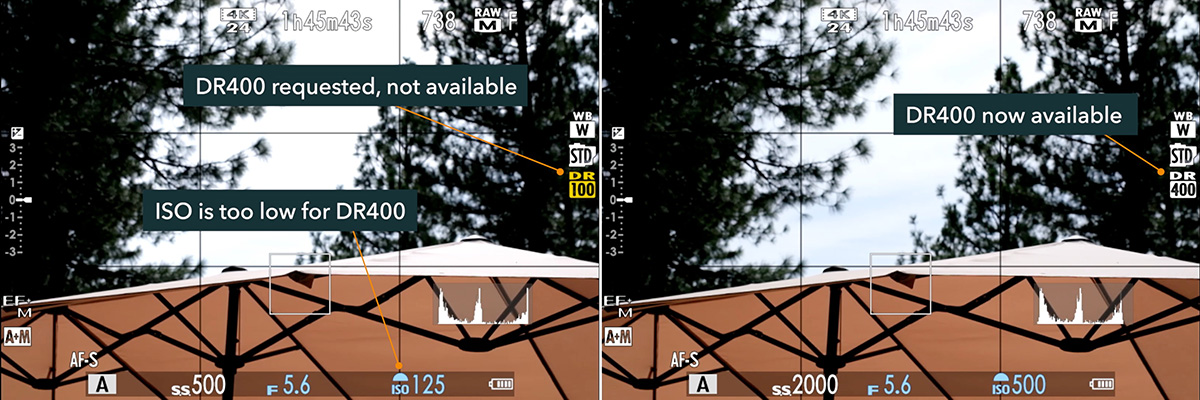
The specific amount of underexposure depends on the DR setting: DR200 underexposes by 1 stop, and DR400 by 2 stops. The key thing to understand is that you're playing an active role in this: increasing the ISO tells the camera to underexpose in the first place.
If you're using Auto ISO, the camera will automatically pick the minimum ISO for you, as you can see in this article.
Nikon: Metering Is the Trigger
Nikon's Active D-Lighting doesn't require a minimum ISO at all. It works at any ISO, because it doesn't need an ISO increase to force the underexposure. Instead, the camera underexposes on its own based purely on metering, according to whatever ADL setting you've selected.
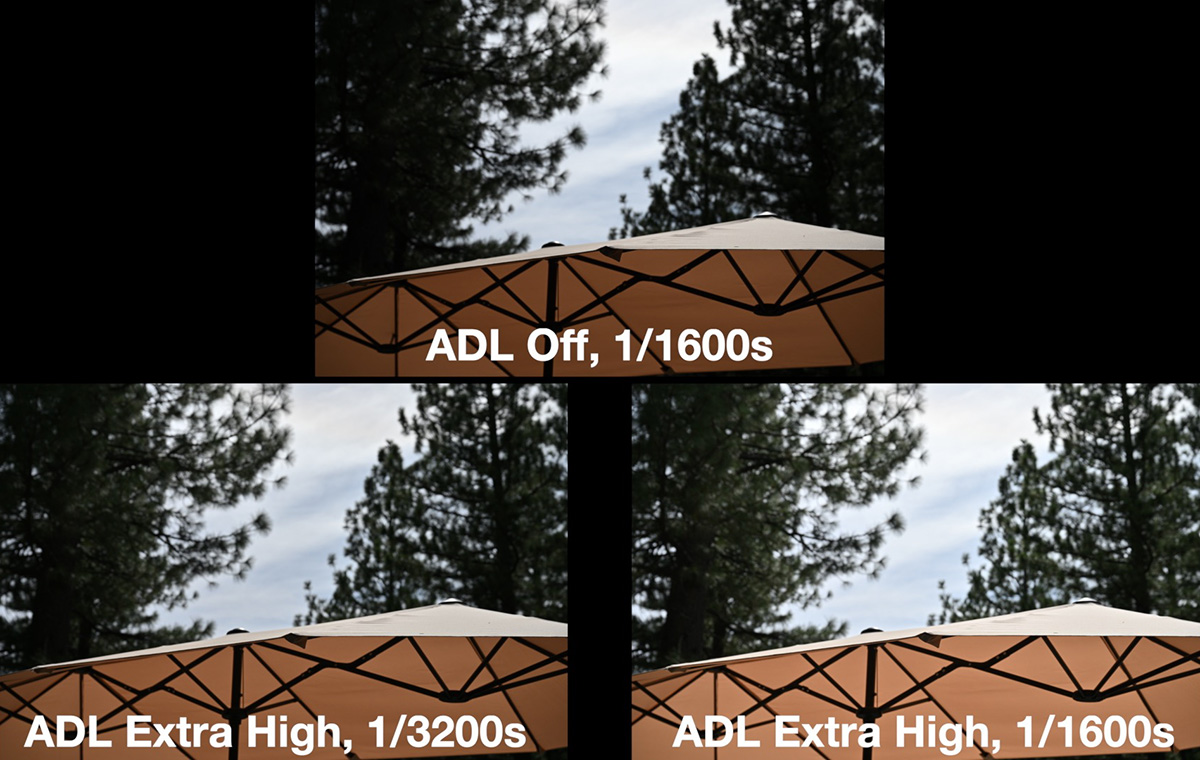
In Aperture Priority mode, you can see this by watching the shutter speed: as you cycle through ADL settings from Off to Extra High, the shutter speed the camera selects increases accordingly, even though the live preview on screen doesn't change. The camera applies the tone curve afterward to bring the shadows and midtones back up to match what you were seeing in the preview. Here's a comparison with ADL Off and ADL Extra High. The only difference you'll notice is the shutter speed.
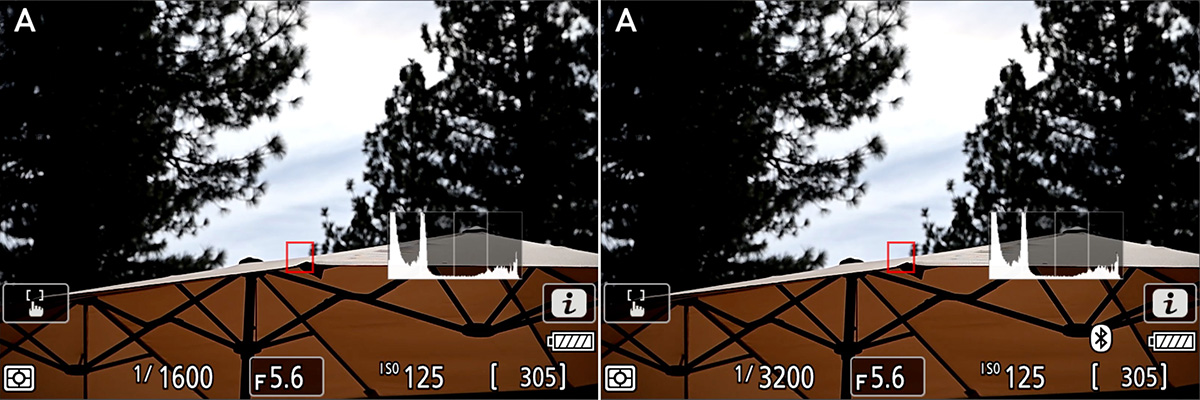
The result is comparable to Fujifilm's, but Nikon doesn't need you to do anything (like raising ISO) to trigger it. It's automatic.
The Manual Mode Gotcha (Nikon Only)
There's one important detail to know if you shoot Nikon in Manual exposure mode.
In Manual mode, you've locked in all three exposure variables (aperture, shutter speed, ISO) yourself. The camera won't override any of them just because you've selected an Active D-Lighting setting. That means ADL in Manual mode skips the automatic underexposure step and becomes a tone-curve-only adjustment.
The camera does give you a subtle warning, though: watch your exposure meter. If your exposure looks correct with ADL off, switching to ADL Extra High will show the meter reading as overexposed, even though your actual exposure settings haven't changed. That's the camera telling you it still wants that initial underexposure, and it's on you to manually provide it by adjusting your aperture or shutter speed to bring the meter back to zero. The example below shows a meter reading of one stop overexposed, even though the histogram doesn't reflect that.
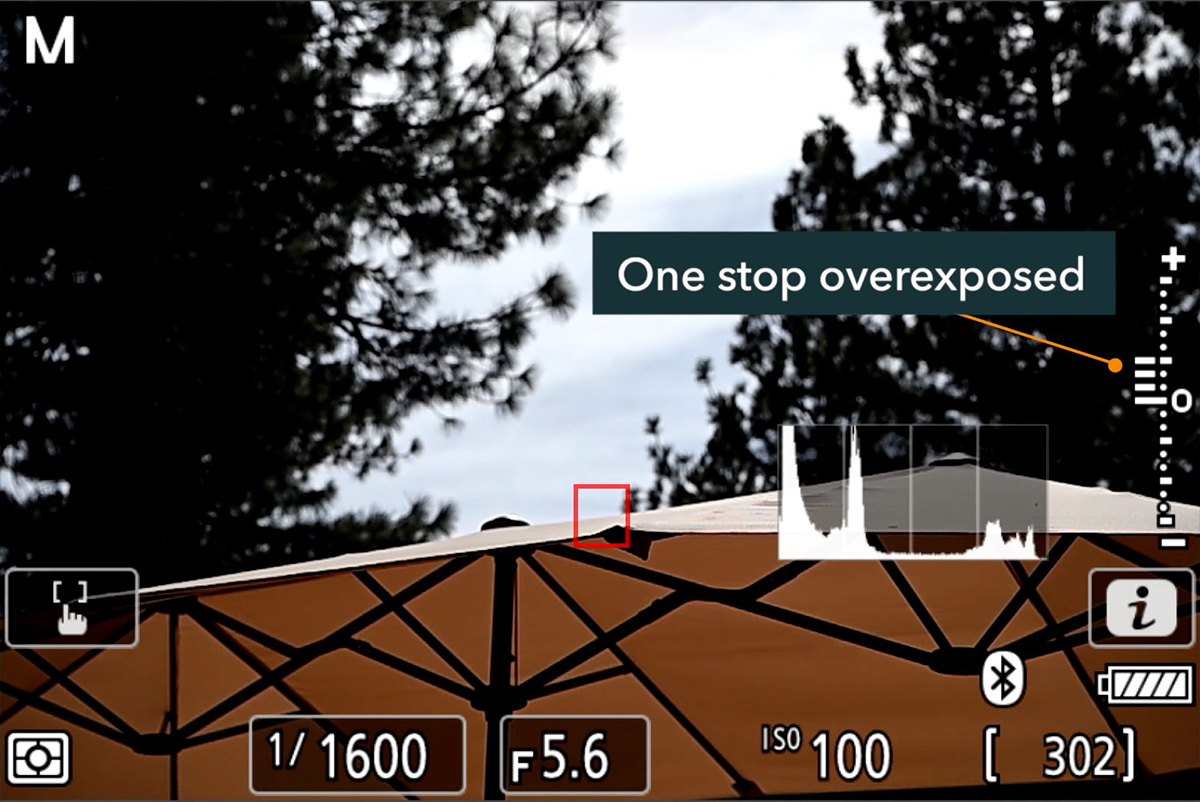
If you miss that cue and shoot anyway, the tone curve still gets applied, but without the underexposure step first, so the resulting image will look noticeably brighter overall than intended, since the camera is stretching an already-correctly-exposed image rather than recovering an intentionally underexposed one.
Fujifilm doesn't have this issue. Because Dynamic Range's underexposure is triggered by ISO rather than metering, it's always applied regardless of exposure mode, including Manual. To use a higher DR setting in Manual mode on a Fujifilm camera, you simply raise the ISO to meet the requirement and compensate elsewhere (faster shutter speed or a smaller aperture) to get that same initial underexposure.
Quick Comparison
| Fujifilm Dynamic Range | Nikon Active D-Lighting | |
|---|---|---|
| Underexposure trigger | ISO increase | Camera metering |
| Minimum ISO required | Yes, varies by DR setting and camera generation | No, works at any ISO |
| Works automatically in Aperture Priority | Yes (via ISO you set) | Yes (fully automatic) |
| Works automatically in Manual mode | Yes, the ISO-driven underexposure still applies | No, it becomes tone-curve only; user must manually underexpose |
| End result | Protected highlights, recovered shadows/midtones | Same |
The Bottom Line
Strip away the underlying mechanisms and both features do the same job: underexpose to protect highlights, then recover the rest with a tone curve. A finished photo shot with either system in a high-contrast scene will look comparable. The real difference is the trigger. Fujifilm uses your ISO setting, and Nikon uses its own metering. This difference only really matters in one specific situation: Manual exposure mode in a Nikon camera, where you need to manually watch the meter and underexpose yourself if you want Active D-Lighting to work the way it's designed to.
There are plenty of other ways to handle high-contrast scenes, and these articles note some of them: